
Tokyo’s 3 Hidden Gems: Breakfast at a Temple, Lunch at a University, and Tea in Ginza
By Vlad
Three places in Tokyo worth visiting if you want to immerse yourself in authentic Japanese culture and try real Japanese food and tea away from tourist routes....

Three places in Tokyo worth visiting if you want to immerse yourself in authentic Japanese culture and try real Japanese food and tea away from tourist routes.
1. 🌅 Tsumugi: Traditional Japanese Breakfast at a Temple
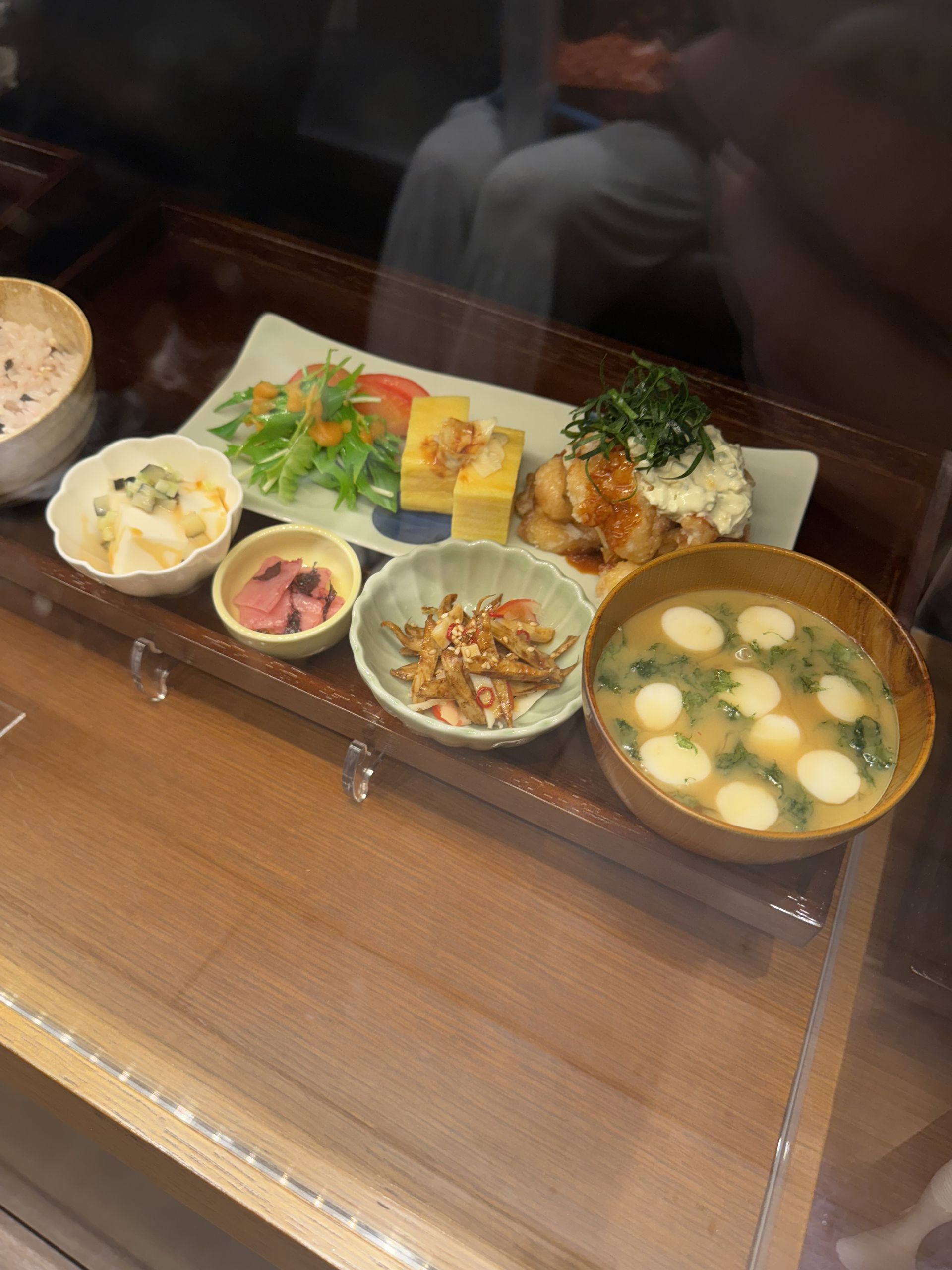
Tsumugi café (築地本願寺カフェ Tsumugi) is located inside the information centre of Tsukiji Hongan-ji Temple in the Tsukiji area. It is a Japanese café (和カフェ) that serves not only a classic Japanese breakfast but also a variety of dishes throughout the day.
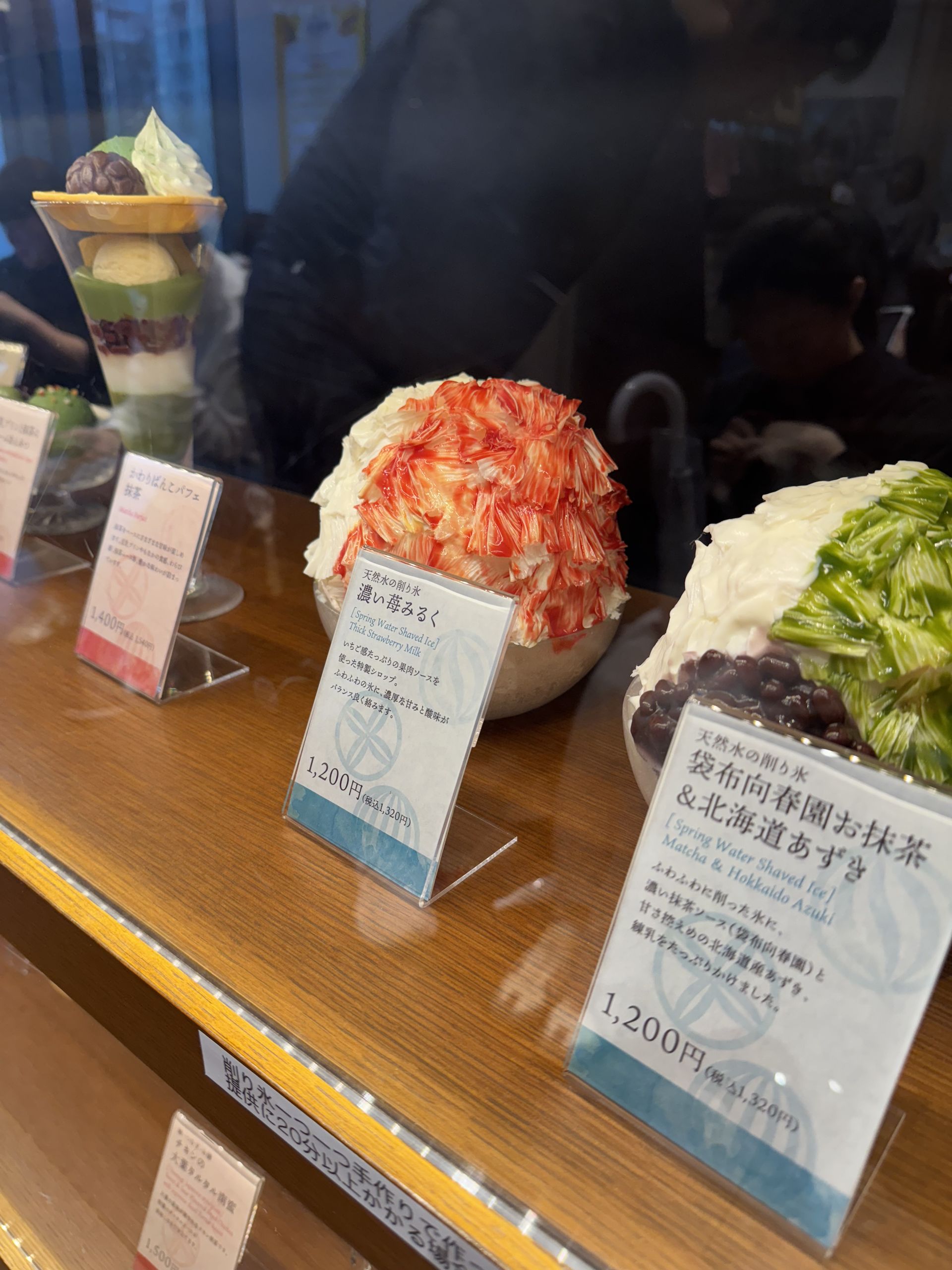
The menu includes traditional Japanese dishes: rice salads, fish (such as mackerel in miso), Japanese hamburgers, and tea beverages. It's especially worth trying the Japanese afternoon tea set with desserts, parfaits with matcha or white peach, pancakes with hojicha cream, as well as various tea drinks — matcha latte, hojicha latte, and others.
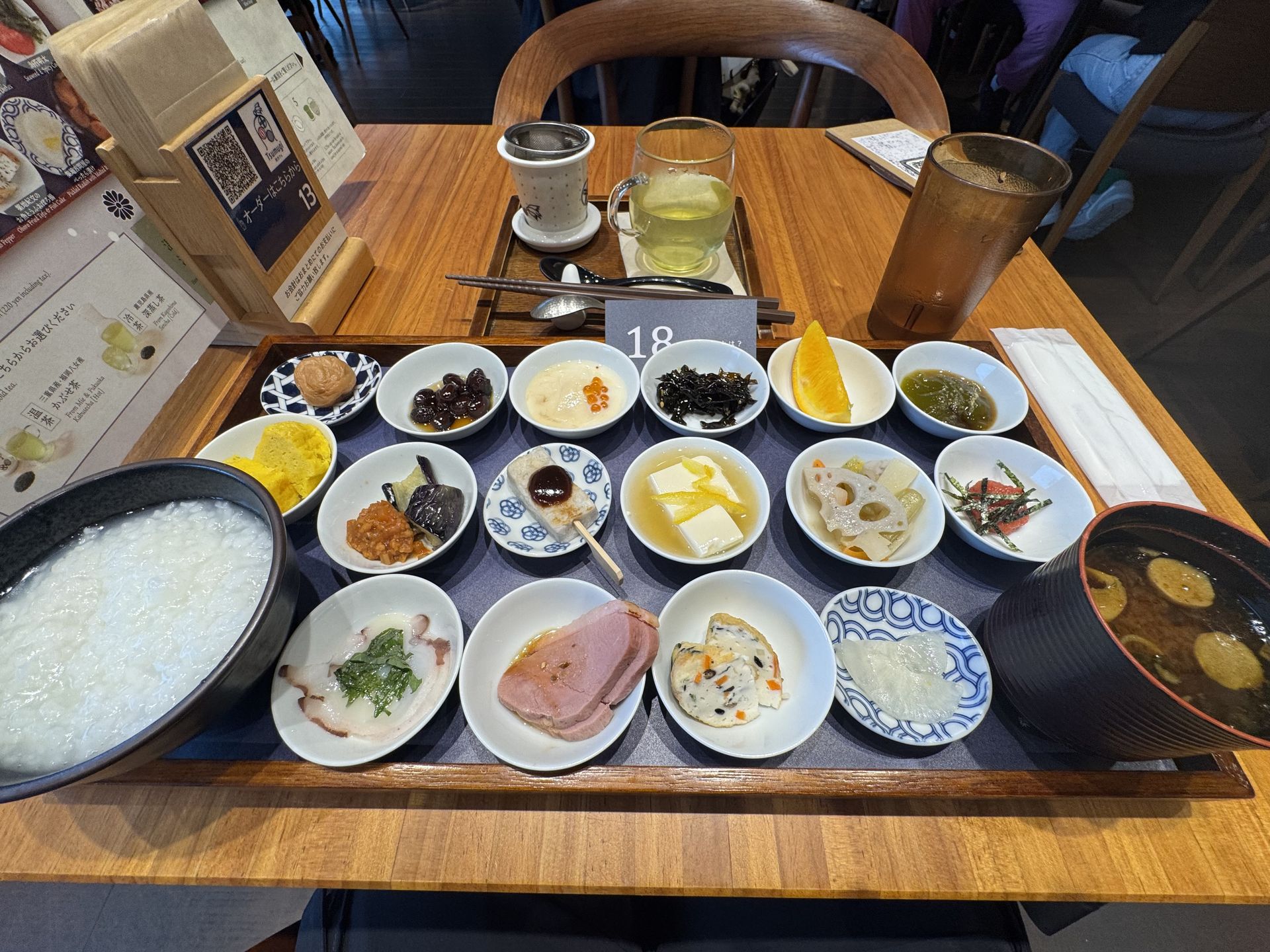
The star of the menu is the legendary 「18品の朝ごはん」 (“18‑dish breakfast”), inspired by the Buddhist tradition of Tsukiji Hongan‑ji. The number 18 refers to the 18th of the 48 vows of Amida Buddha, which is considered especially important, so “18” in Japanese culture is associated with something central or “signature”.
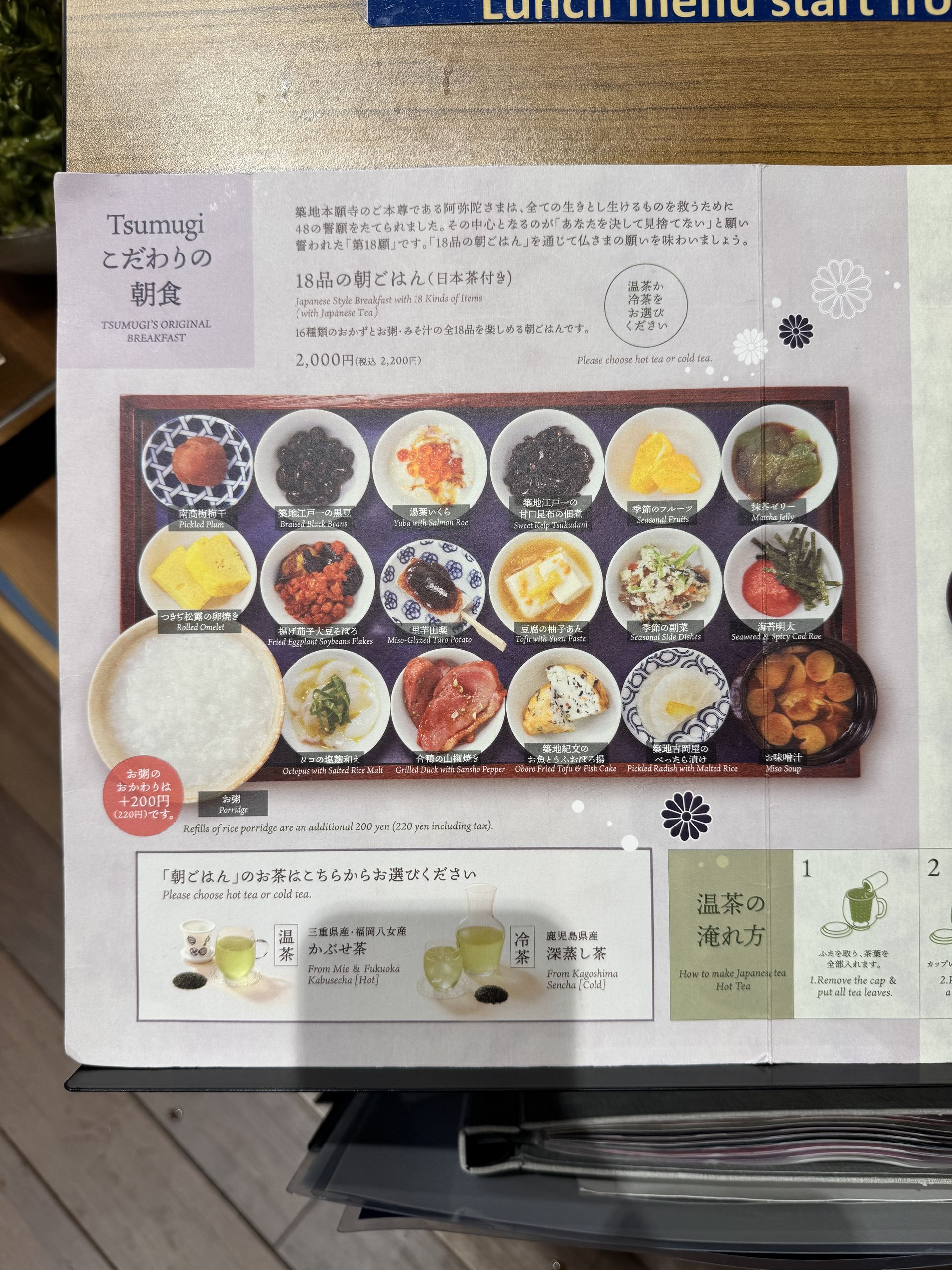
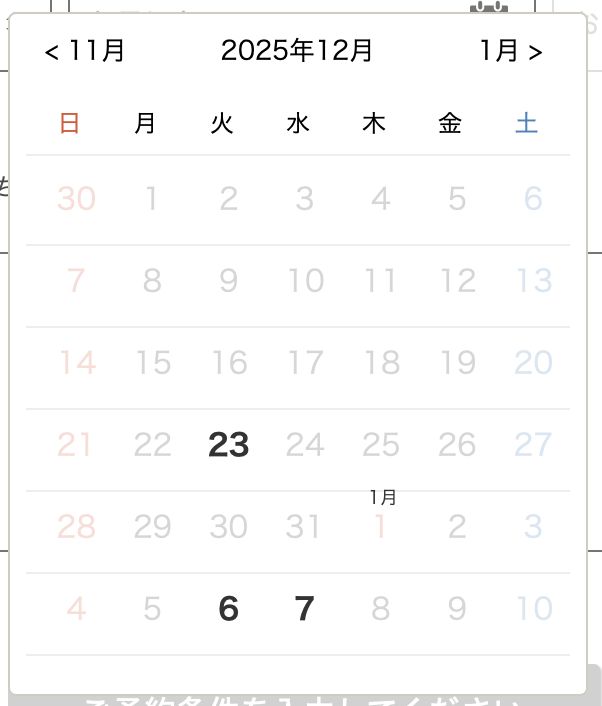
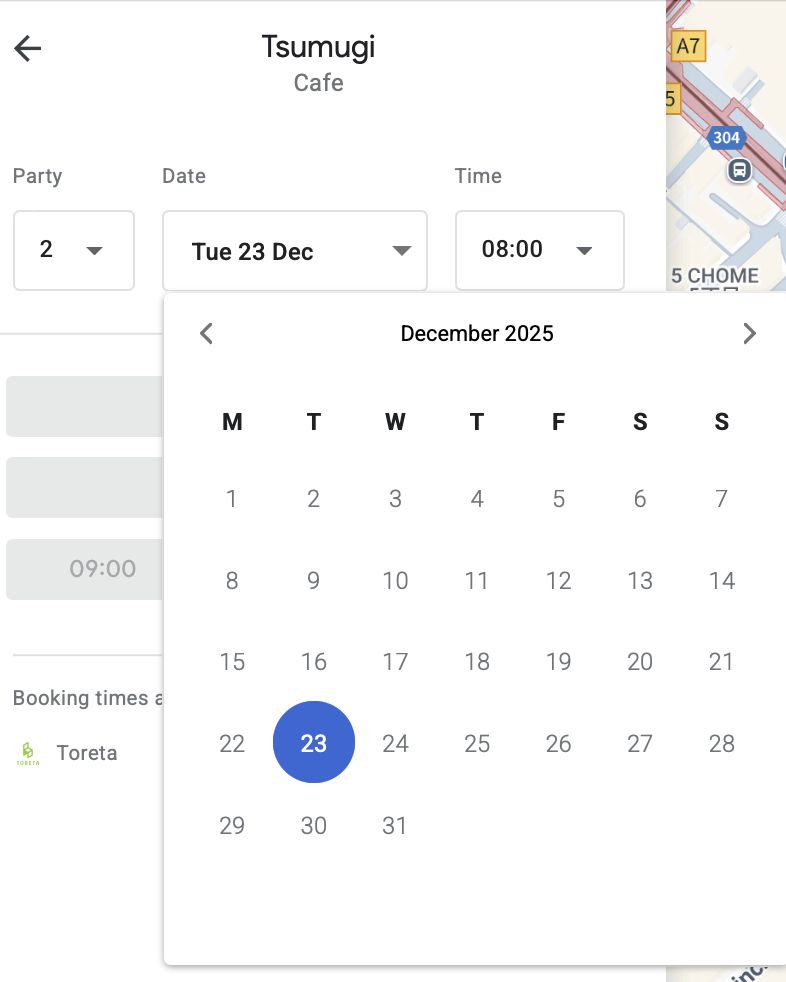
Important: This is a very popular place with long queues. Make sure to book a table in advance. There are a few tables available for walk-ins, but you might have to wait a couple of hours (not kidding), and the café might close by the time your turn comes. When I checked reservations on December 8, the only available slots were for a single date — December 23, so plan your visit well ahead; as with most really great spots in Japan, it’s better to think about going there long in advance.
How to book breakfast:
You can book online via the official booking page: Tsumugi booking system. The same page lists the current rules and prices (as of early 2026, the 18‑dish breakfast is 2400 yen before tax / 2640 yen including tax, and the “Temple breakfast” is 1600 yen before tax / 1760 yen including tax) https://yoyaku.toreta.in/wacafetsumugi/#/. I booked through the Google Maps interface — the reservation synced with their system without any issues and everything worked perfectly. Key points:
- You can book up to 30 days in advance (including the booking date); dates you can’t click on are either not open yet or already fully booked.
- A booking means a table reservation; you always pay on site when you leave. There is no prepayment — be careful with fake websites.
- The morning slots (roughly 8:00–11:30) are 90 minutes each, so try to arrive at least 5 minutes before your slot starts.
- Same‑day online booking is not available — only walk‑ins.
- If you’re more than 15 minutes late without contacting them, they may cancel your reservation and give the table to people waiting in line.
After booking, you’ll receive an SMS and an e‑mail with your reservation number — keep it, as staff will ask to see it when you’re seated. There’s also a detailed FAQ (in Japanese) about allergies, rules, and booking methods on the temple’s help site: tsukijihonganji.zendesk.com.
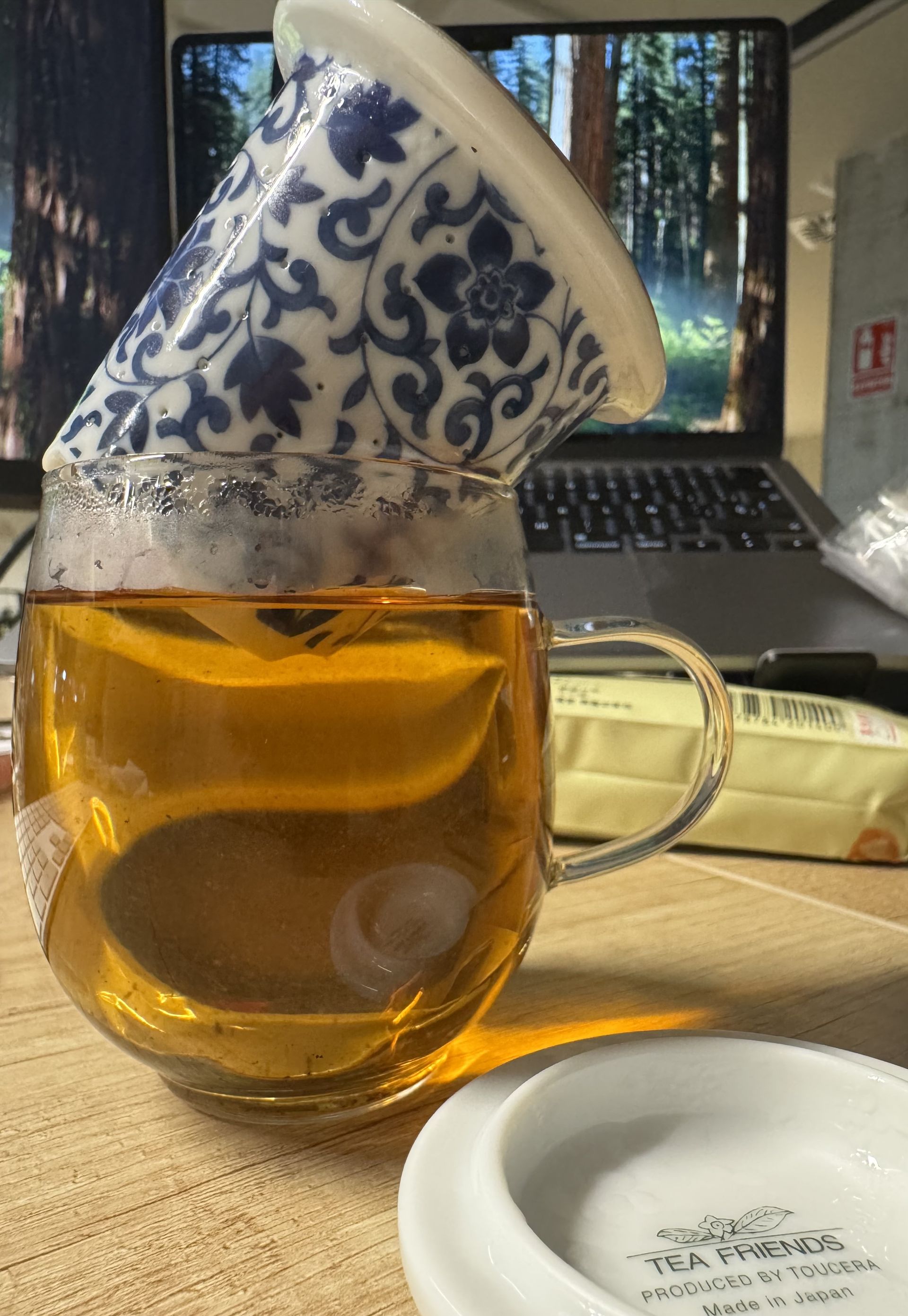
There's also a small shop inside the café where you can buy authentic souvenirs to bring home: tea cups, incense sticks and holders, and other traditional Japanese items. I bought myself a tea cup with a ceramic strainer and lid — it brings me joy every day and reminds me of breakfasts in Japan :)
Address: Japan, 〒104-0045 Tokyo, Chuo City, Tsukiji, 3 Chome−15−1 本願寺インフォメーションセンタ 棟内カフェ区画
Map:Google Maps
Official website:cafe-tsumugi.jp
2. 🍜 Chuo Dining Hall: Lunch at the University of Tokyo Cafeteria
The Central Cafeteria of the University of Tokyo (東京大学 中央食堂) is primarily for students and university staff, but visitors from outside the university can also enter with some restrictions.
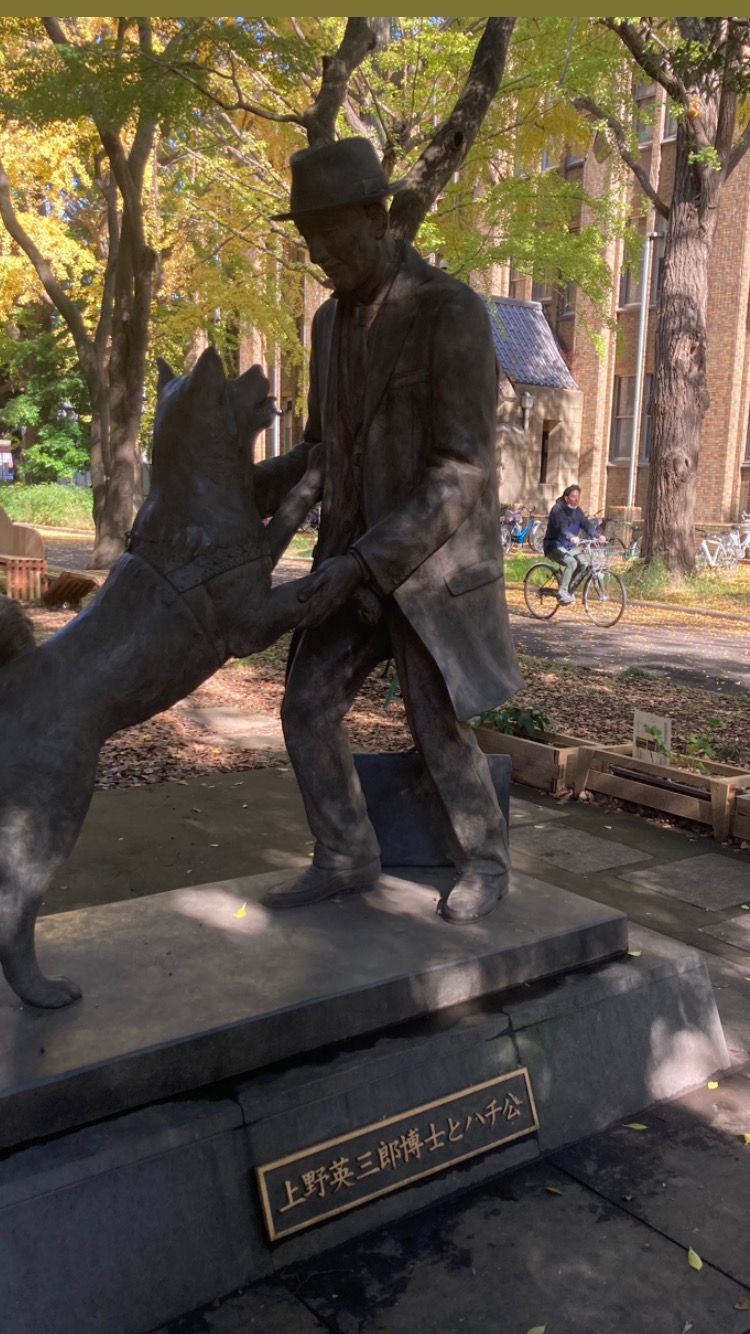
This place has a special historical significance: Professor Hidesaburo Ueno worked here — the same professor who was the owner of the famous dog Hachiko. The Hongo campus is home to a lesser-known Hachiko statue, which was erected in memory of the professor's faithful friend.
What makes this place special is that you can experience a unique student atmosphere — you find yourself among students of one of Japan's most prestigious universities, having lunch between lectures, discussing projects, or simply relaxing.
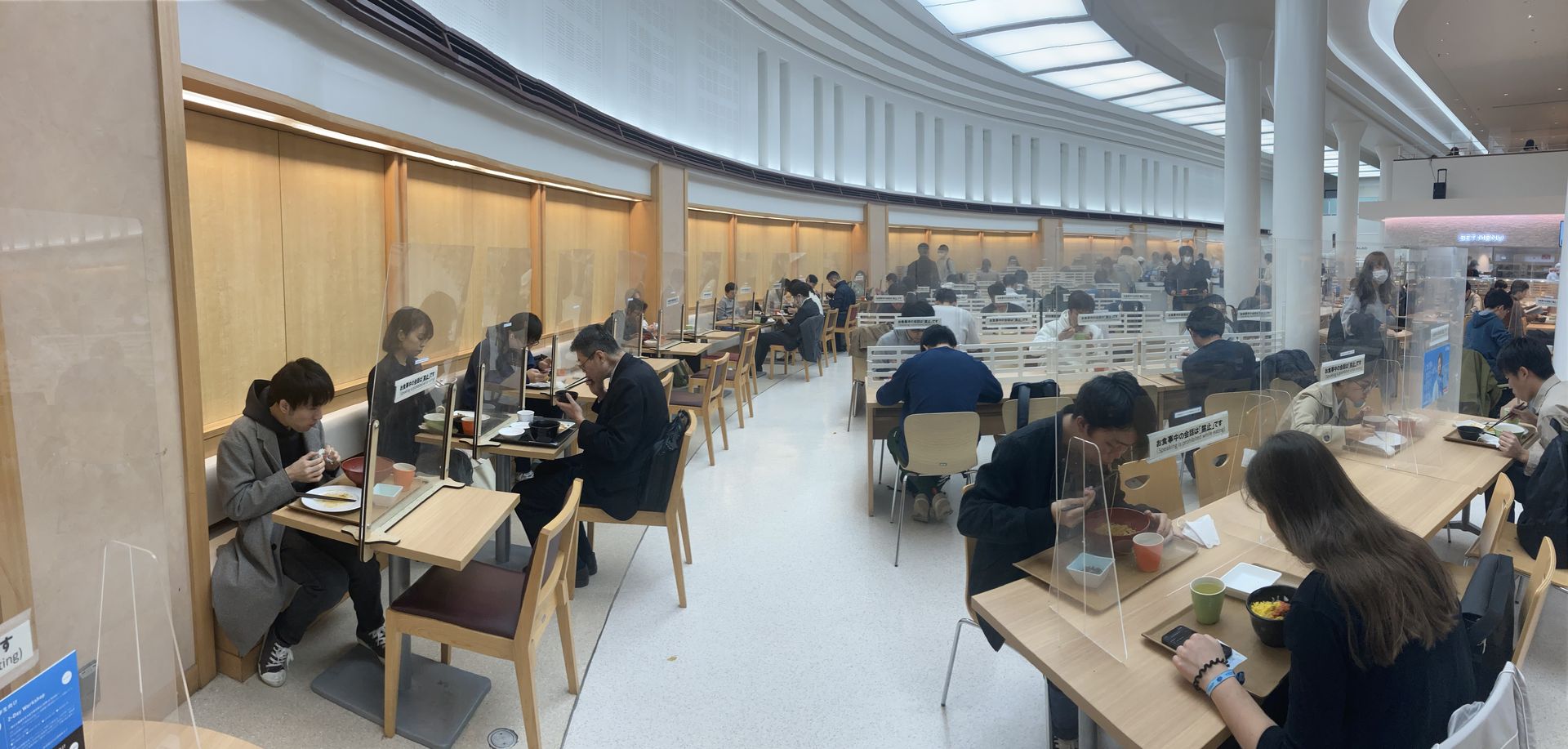
Important for visitors from outside the university:
- From 11:30 to 13:30, the cafeteria is available only to students and staff
- Photography is prohibited in the cafeteria
- Payment is made before eating (after choosing from the menu)
- Seats cannot be reserved before payment
- After eating, you must vacate your seat for the next visitors
- Dishes must be returned to the designated area (下膳口)
- If the rules are not followed, you may be refused service
This is a great place to try what Japanese students eat every day. Here they serve typical cafeteria dishes: curry rice, rice with chicken or salmon, udon, ramen, tempura. This isn't fine Japanese cuisine, but everyday Japanese food — simple, filling, and affordable. Portions are generous. Open from 11:00 to 21:00. Note: prices and menu items may differ from current ones; the information is accurate as of November 2022.
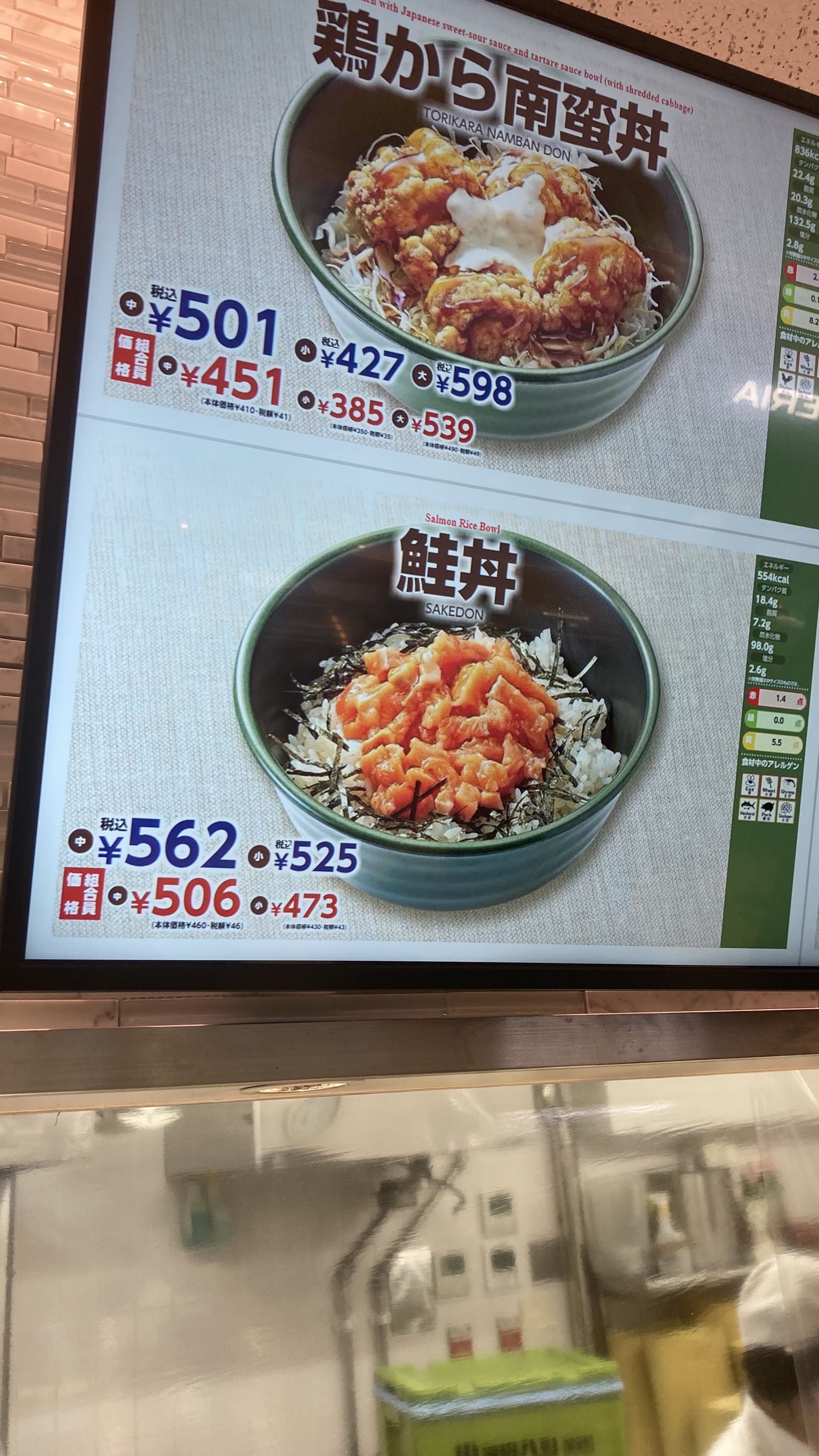
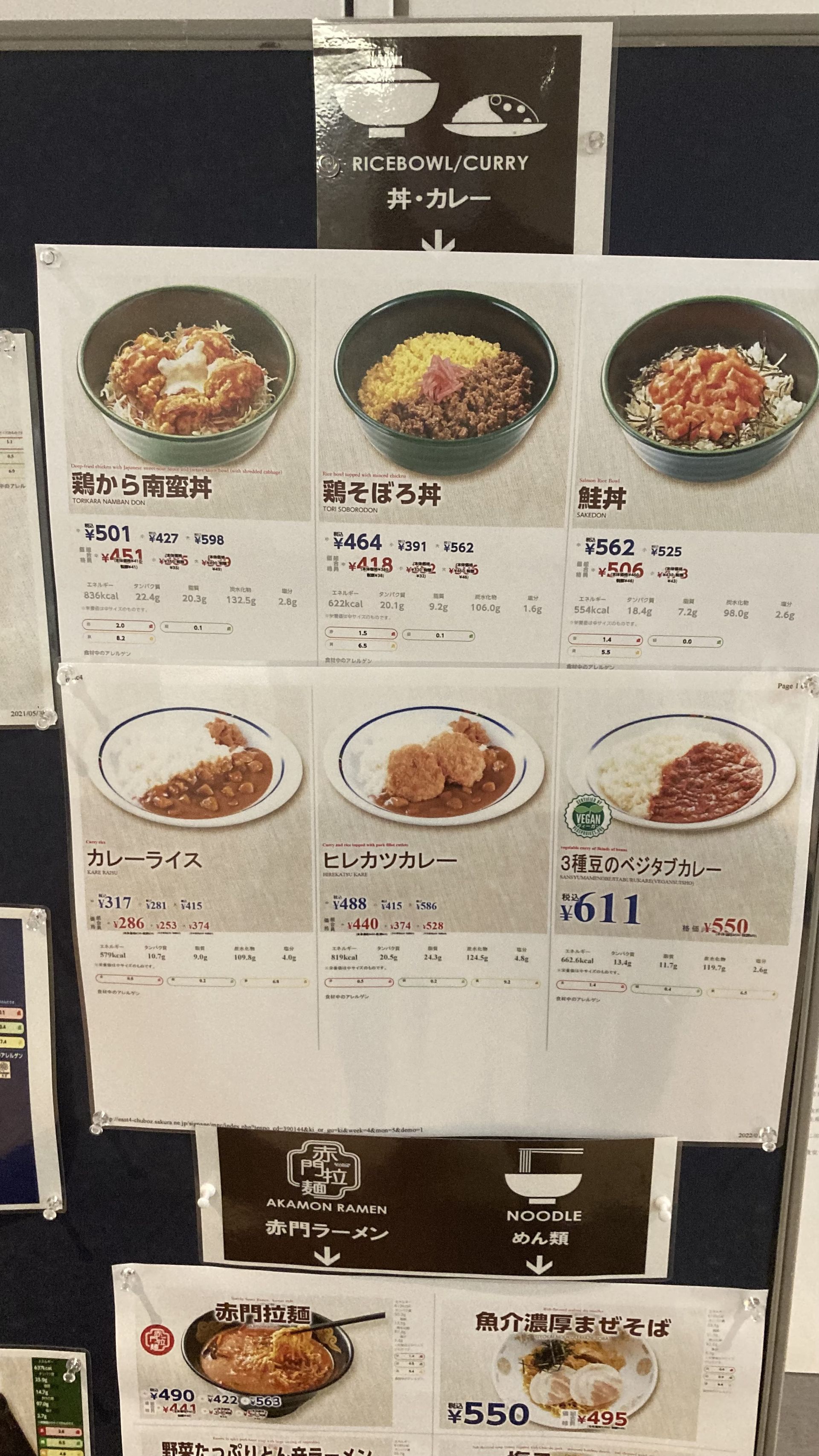

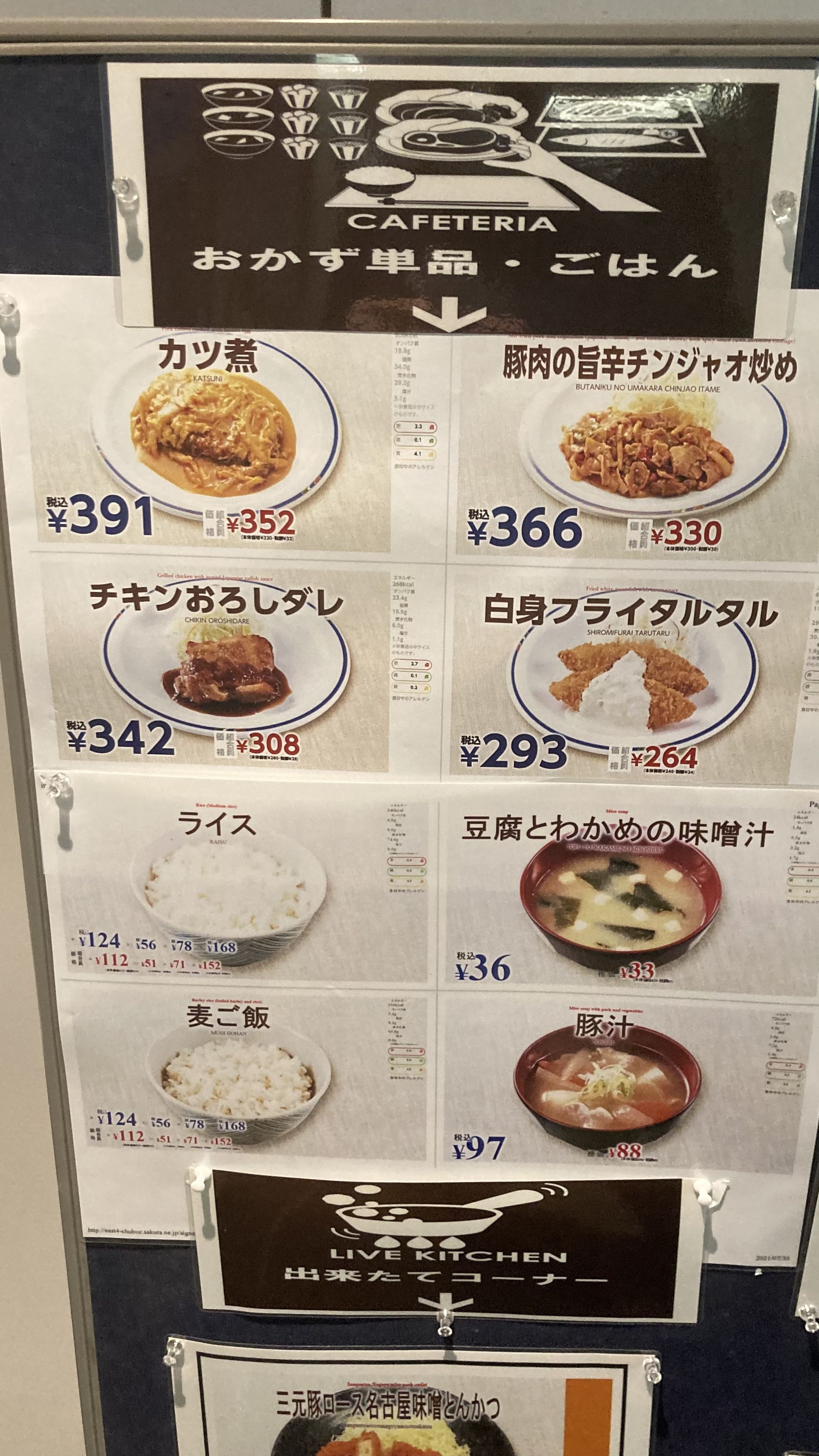
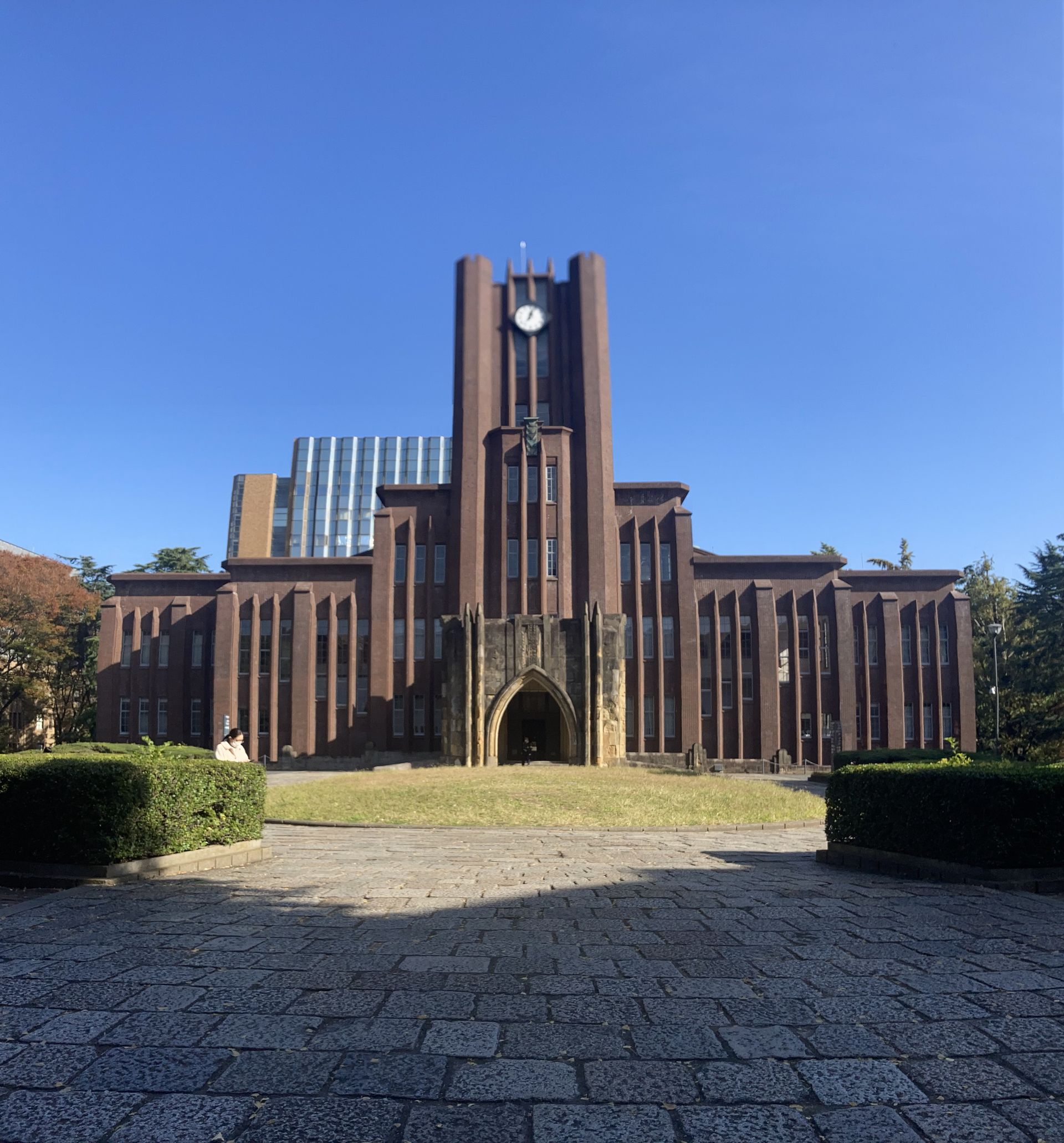
In addition to having lunch, it's worth visiting the Hongo campus for the architecture of the university buildings, which were built during the reconstruction period in a style known as Uchida Gothic (Uchida Gothic style). Most of the buildings on the campus are built in this style. Yasuda Auditorium with its clock tower was built in 1925 with a donation from entrepreneur Yasuda Zenjiro and now serves as the central symbol of the campus.
The campus is home to the historic Red Gate (Akamon) — one of only two remaining gates from Edo-period daimyō mansions in Tokyo (the other is Kuromon, now located in the Tokyo National Museum). The gate was built in 1827 in the Maeda clan residence in Edo to welcome Lady Yasu-hime, daughter of Shogun Tokugawa Ienari, as a bride for Nariyasu Maeda. Before World War II, the gate was registered as a National Treasure; it is now designated as an Important Cultural Property and a symbol of the university.
In Japanese culture, red gates are traditionally associated with good luck and prosperity — this is connected to Shinto traditions, where the colour red symbolises protection from evil spirits and attracting fortune.
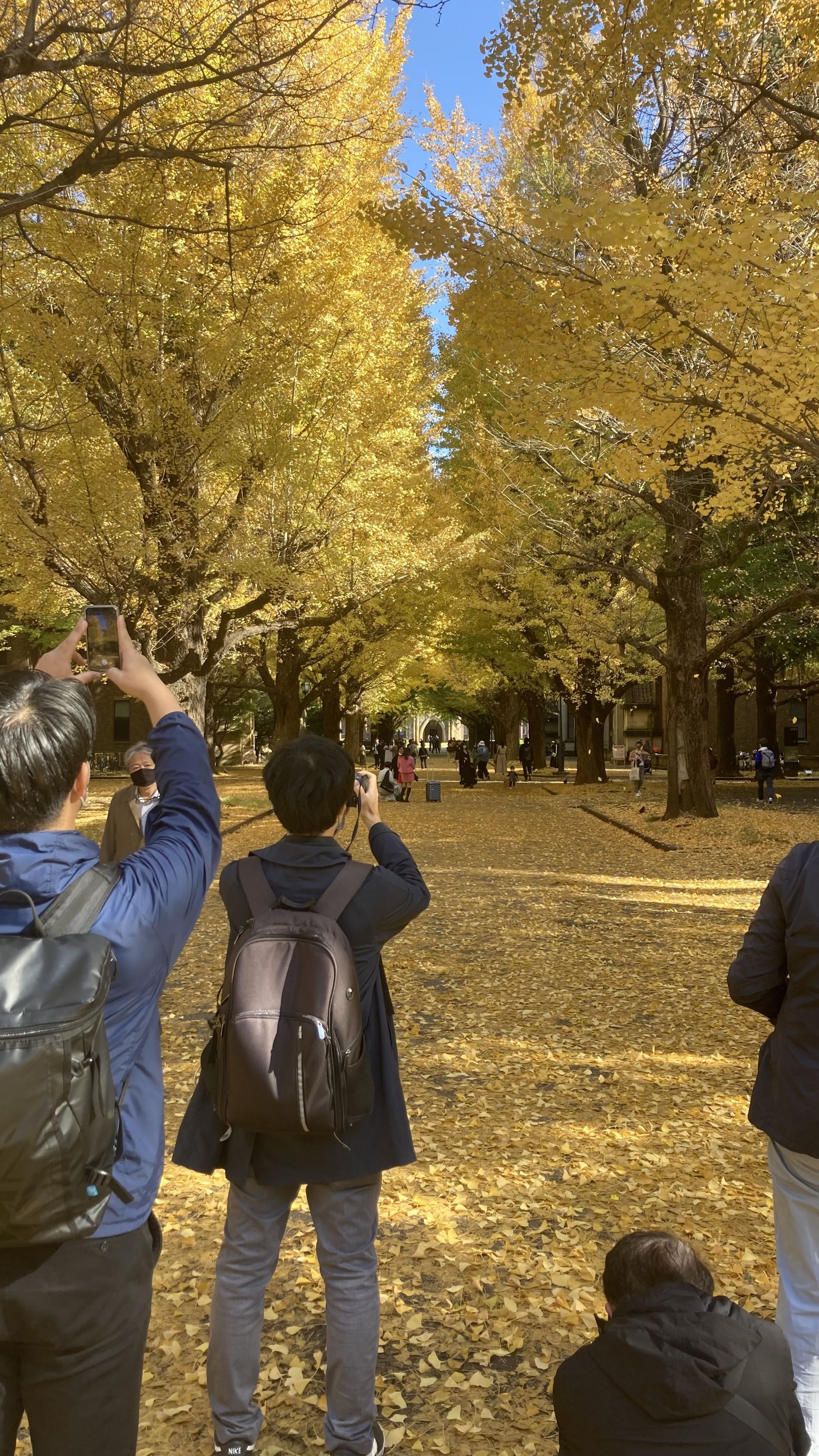
It is especially beautiful here in autumn, when the ginkgo trees (銀杏, ichō) turn bright yellow, creating picturesque alleys. The ginkgo leaf is also the official symbol of the university — the campus is home to many of these trees, which are considered "living fossils" that have remained largely unchanged since ancient times. The peak of color usually occurs in late November — early December. Photographers and nature lovers come here specifically to photograph and admire the trees adorned with golden foliage.
Address: 7 Chome-3-1 Hongo, Bunkyo City, Tokyo 113-0033, Japan
Map:Google Maps
Official website:utcoop.or.jp
3. 🍵 Jugetsudo: Tea Shop in Ginza
Jugetsudo (寿月堂 銀座歌舞伎座店) is a tea shop and café on the fifth floor of Kabuki-za Tower in Ginza. Here you can try different varieties of premium Japanese tea: sencha, gyokuro, hojicha, and rare varieties.
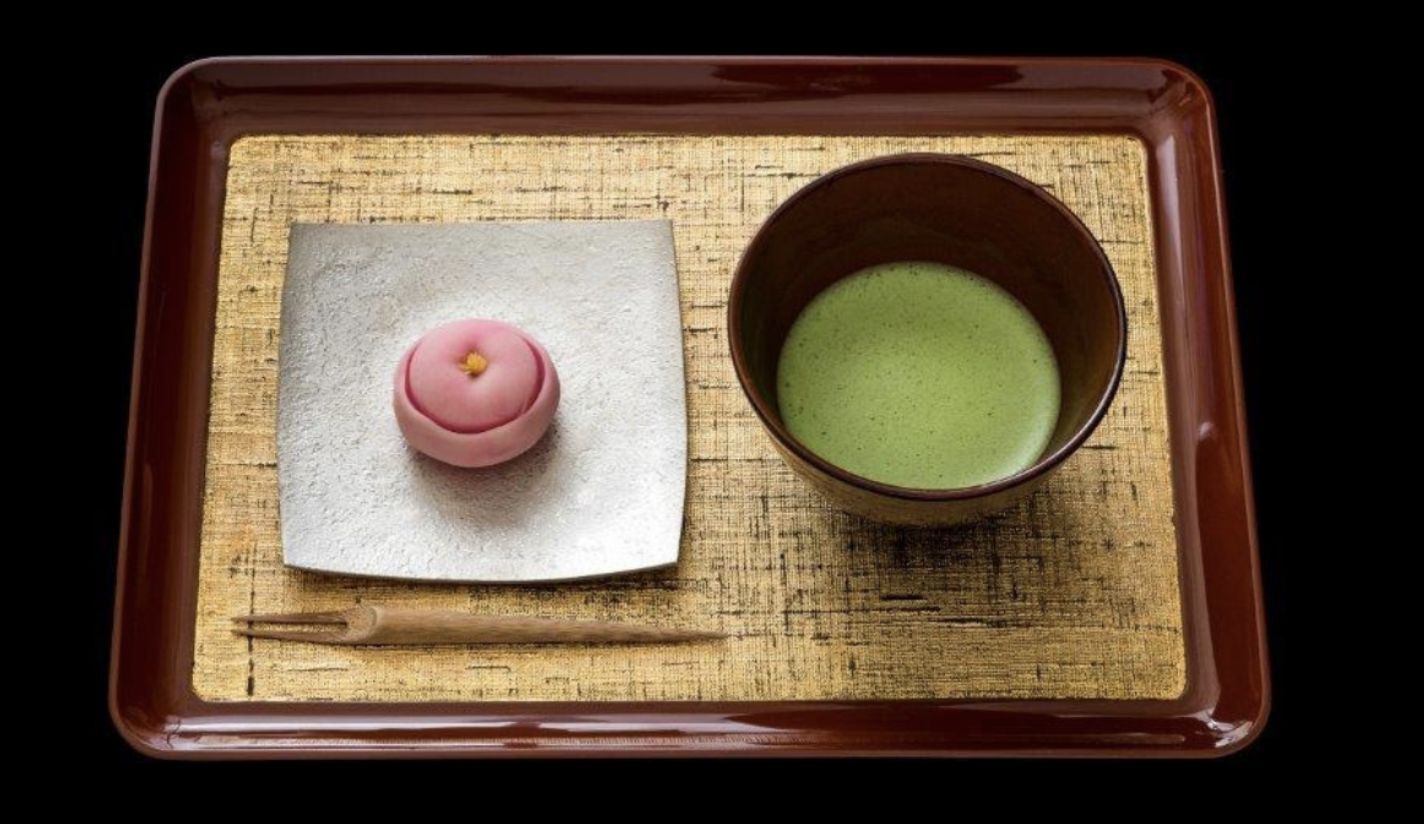
This place is part of the "KABUKIZA Gallery & Garden" complex, dedicated to experiencing Japanese culture.
History and Philosophy: Jugetsudo is a brand with a 170-year history, founded in 1854 (at the end of the Edo period) by Maruyama Nori, a nori (seaweed) wholesaler in the Nihonbashi district of Tokyo. Since 1980, the company has also been supplying premium quality tea under the Jugetsudo brand. The name "Jugetsudo" means "the place from where one looks at the moon" — reflecting the Japanese philosophy of contemplating nature and the changing seasons, the tradition of admiring the moon reflected in water, and enjoying tea in such an atmosphere.
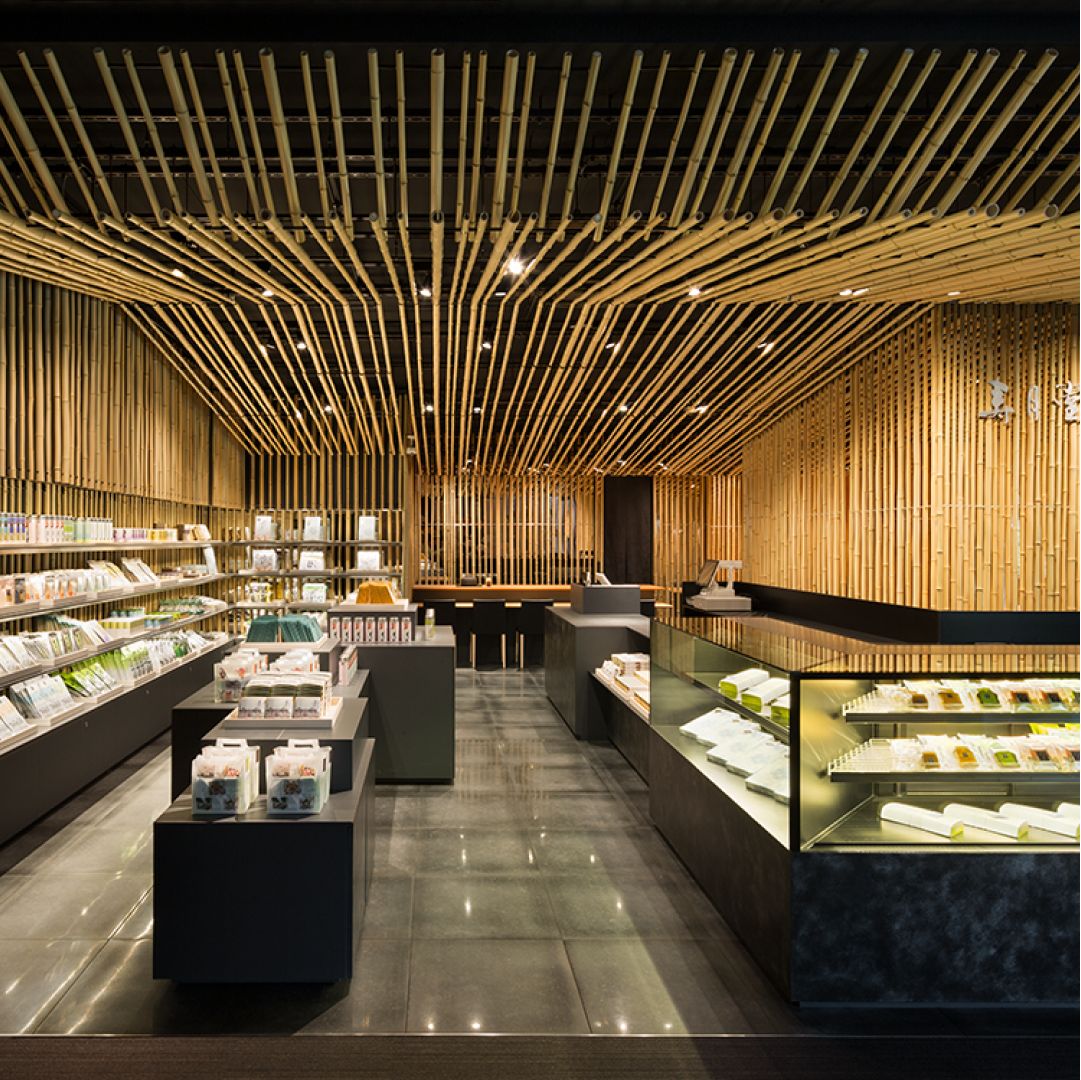
Kengo Kuma's Unique Design: What makes Jugetsudo special is its unique design: the tea house is surrounded by about 3,000 bamboo stalks, created by the famous Japanese architect Kengo Kuma (V&A Dundee, Nezu Museum in Tokyo, The Opposite House in Beijing, 1Hotel in Paris). The idea was to evoke the feeling of a bamboo forest — a place with special light and air, separate from the ordinary world. The interior uses Japanese cypress (hinoki) without knots or blemishes — traditionally it was believed that items placed on such a counter would become smoother. This place was created to enjoy the taste of "nature."
Tea Room: In the bamboo lounge, you can not only try different varieties of premium Japanese tea, but also order light meals and sweets, as well as choose from a collection of wines. This is the perfect place to relax and immerse yourself in Japanese tea culture.

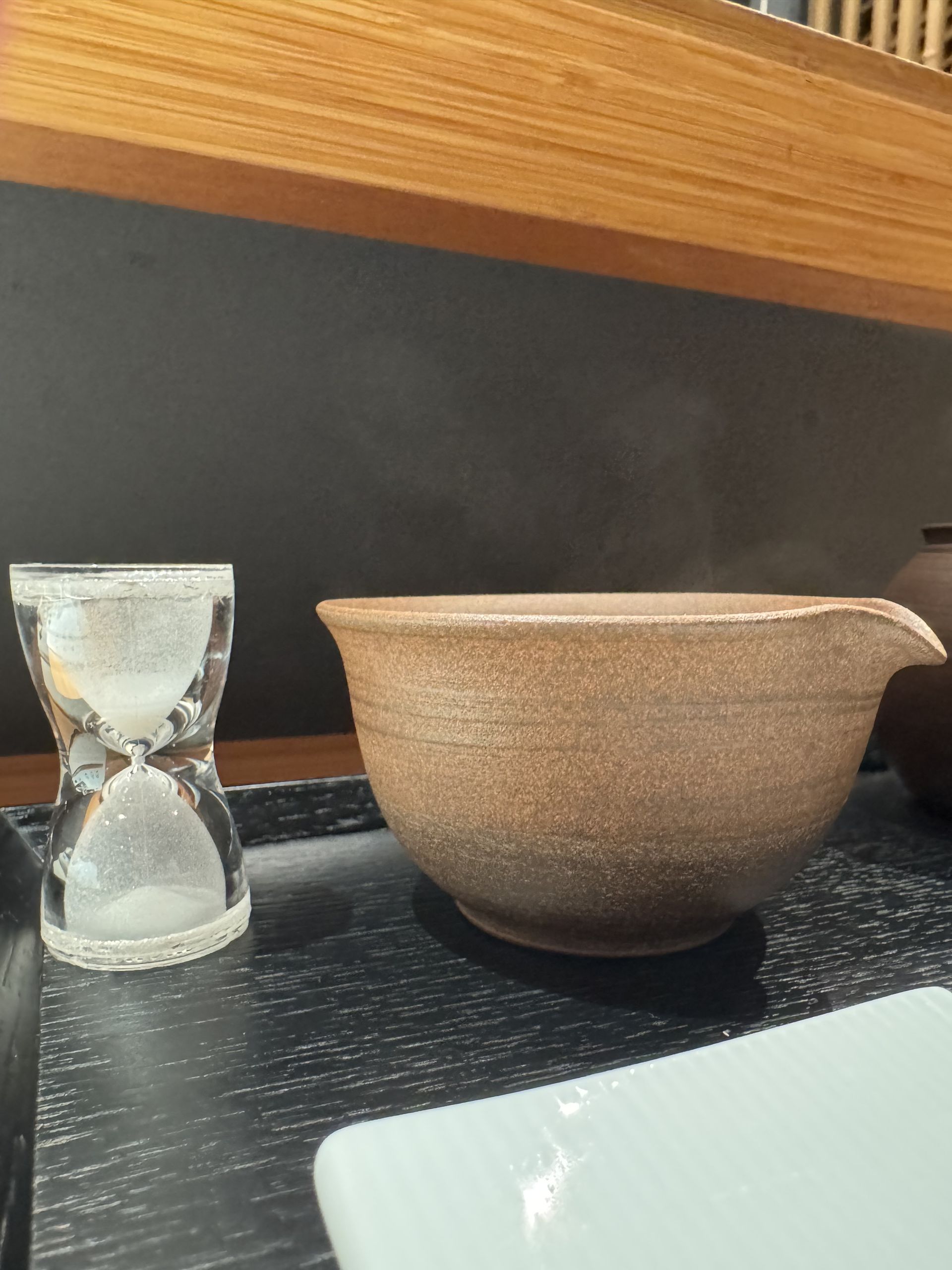
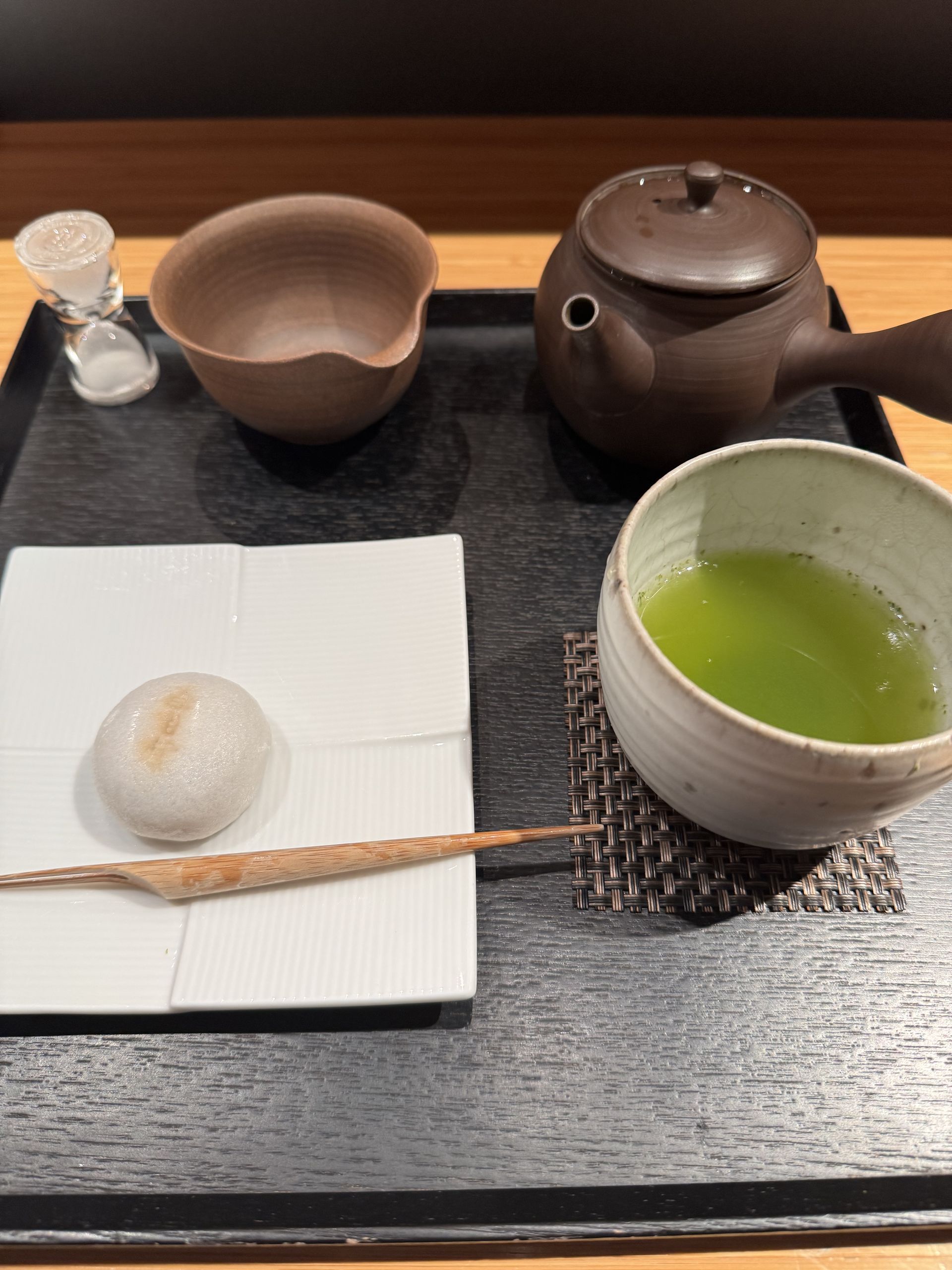
Tea Selection: The shop offers a wide selection of premium Japanese teas:
- Sencha — classic green tea
- Gyokuro — premium green tea of the highest quality
- Matcha — powdered green tea for tea ceremony
- Genmaicha — green tea with roasted rice grains
- Hojicha — roasted green tea with a mild taste
- Other teas and infusions — rare varieties and Japanese herbal teas
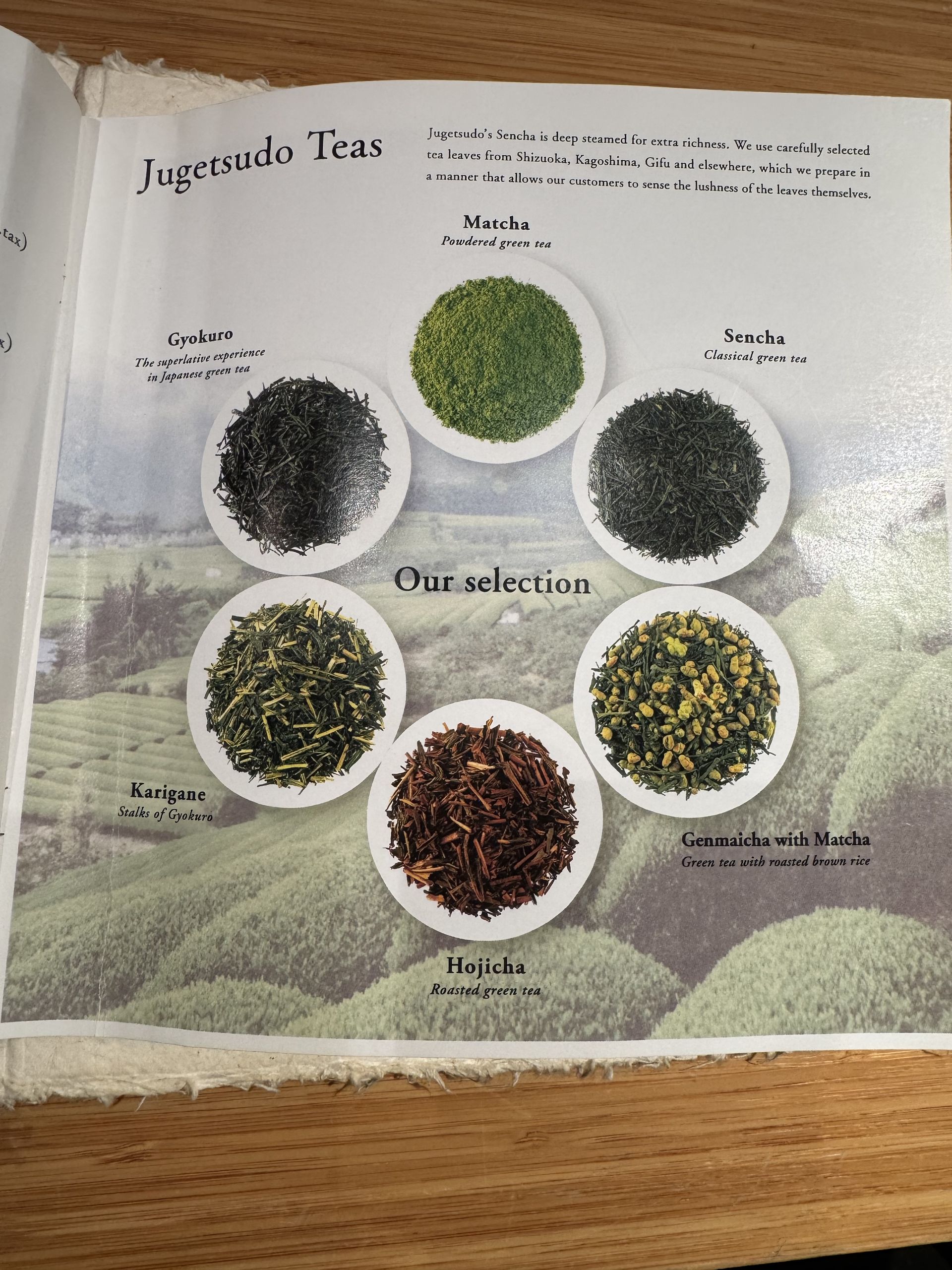
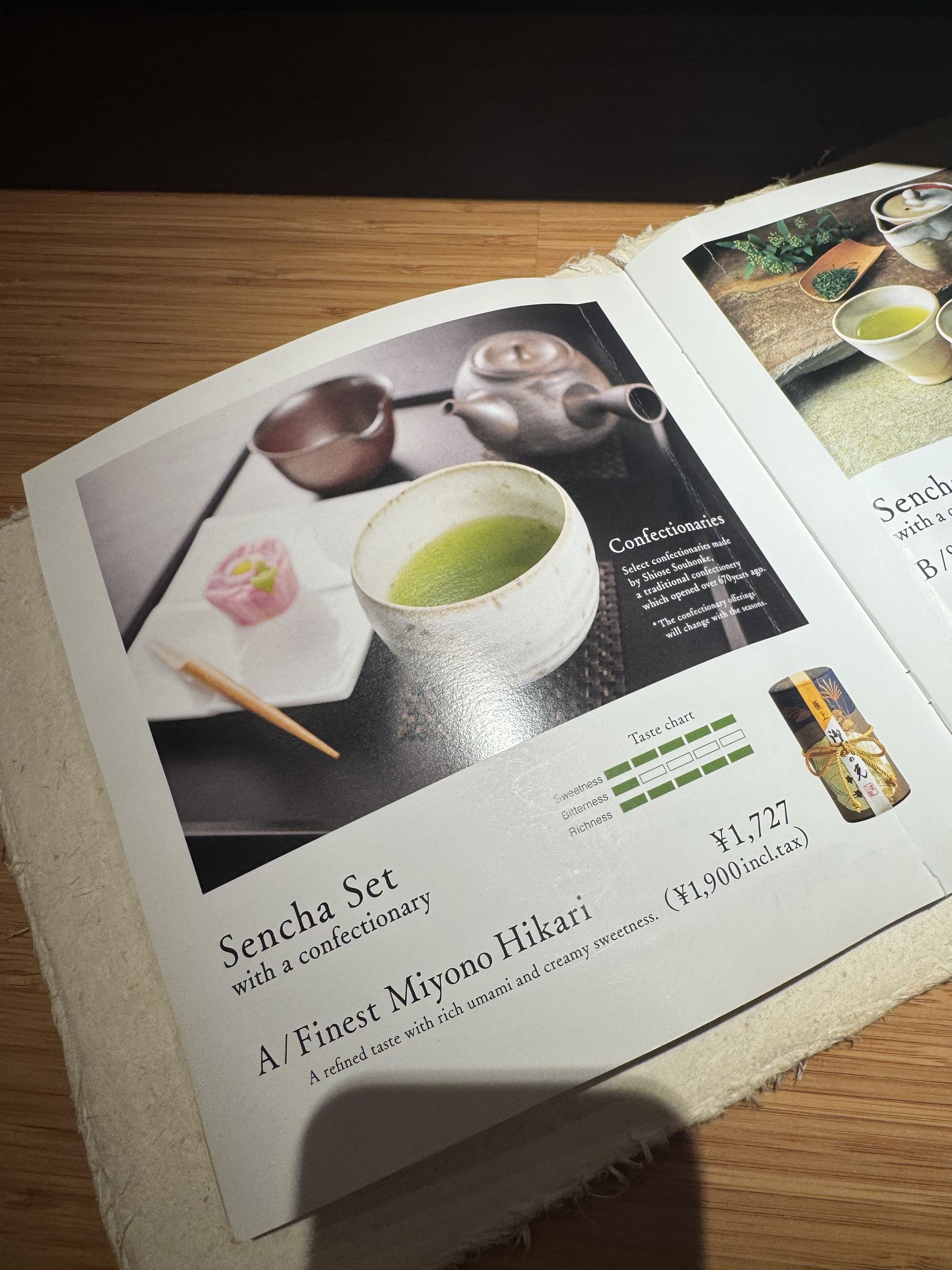
You can also purchase gift sets, sweets, nori (seaweed), and tea accessories at the shop. After tasting, you can buy the tea you liked. The staff will tell you how to store and brew tea properly and give you preparation tips.
Prices: Approximate prices in Jugetsudo's online store: sencha €15–30, gyokuro €24–28, matcha €23–52 (premium matcha for ceremonies up to €52), genmaicha €11–15, hojicha €15–20, herbal infusions €16–38. Gift tea sets €55–113, premium sets with tea ware up to €180. Gift certificates for tea ceremonies €50–70, certificates for Japanese tea initiation from €55. Tea accessories from €5 (bamboo matcha spoon) to €120 (tea burner). Prices are current as of 2025 and may differ at the physical store in Ginza.
Online Store: The full range of teas, gift sets, and accessories can be ordered online at jugetsudo.com. Delivery is available to mainland France, all EU countries, the United Kingdom, Norway, Switzerland, and the United States. Delivery is free from €60 in France and from €120 across Europe. Estimated delivery times: 2–10 working days in France, 5–15 working days to other countries. Orders are usually shipped within 3 working days after payment.
Rooftop Japanese Garden: Right next to Jugetsudo is a serene rooftop Japanese garden — a small oasis of tranquillity in the centre of Ginza. The garden is decorated with monuments related to Kabuki and creates an atmosphere of traditional Japan amidst modern urban development.

Other Attractions on the 5th Floor: Besides Jugetsudo, there are several other interesting places on the floor:
- Kabukiza Gallery — a gallery introducing the charm of Kabuki, with popular photo zones using trick art (3D images)
- Kimono toiki — a kimono shop with original Kabuki-style designs where you can try on traditional clothing
- 4F Corridor — on the fourth floor is the "Goemon Staircase" with portraits of former Kabuki actors and theater models
Address: Japan, 〒104-0061 Tokyo, Chuo City, Ginza, 4 Chome−12−15 歌舞伎座タワー5階
Opening hours: Shop: 10:30–17:30; 10:30–18:00 (Saturday). Tea room: 10:30–17:30 (last order at 17:00)
Map:Google Maps
Official website:jugetsudo.com
How to get there: Higashi Ginza metro station (Hibiya or Asakusa lines), Exit 3 — direct access. Ginza Station (Ginza, Marunouchi, Hibiya lines), Exit A6 — a 5-minute walk. From Tokyo Station (JR and metro) — about 10 minutes by taxi. Important: use the private elevator to access the 5th floor.
💭 Why These Places Are Special
All three places offer an authentic experience away from Tokyo's main tourist routes, allowing you to immerse yourself in real Japanese culture and daily life.
Tsumugi is a unique opportunity to try traditional Japanese breakfast at the temple information centre, in an atmosphere where modernity meets tradition. The popularity of this place among locals speaks for itself — they really serve authentic Japanese food here.
Chuo Dining Hall is a chance to feel like part of the Japanese student community, try the everyday food that Japanese people eat, and touch history (remember the Hachiko story!). This is a place where you can see real Japan without the tourist polish.
Jugetsudo is not just a tea shop but a whole journey into the world of Japanese tea culture. A brand with 170 years of history, a space created by the famous architect Kengo Kuma, a rooftop Japanese garden in the centre of Ginza, and access to the Kabuki gallery — all of this makes Jugetsudo a special place where you can not only buy premium tea but also fully immerse yourself in Japanese aesthetics and philosophy.
Each of these places opens its own facet of Japan — from everyday student life to an exquisite tea ceremony, from traditional breakfast at a temple to modern architecture inspired by nature.
Support the Author
Liked the content? Support the author.
Your support helps me keep creating!
Comments (0)
Loading…
No comments yet. Be the first to comment!